News

News

Discover the Latest News About OWNIC in Our News and Press Area

Why Is Laboratory Swing Door Critical for Safe and Efficient Controlled Environments?

2026-05-07 0 Leave me a message

Laboratory environments require strict control over airflow, hygiene, safety, and accessibility. One often overlooked but essential component is the laboratory swing door. This article explores how laboratory swing doors contribute to contamination control, operational efficiency, and compliance with modern laboratory standards. It also breaks down materials, design considerations, installation practices, maintenance strategies, and real-world applications. Whether used in pharmaceutical facilities, research labs, hospitals, or cleanrooms, the right door system plays a crucial role in protecting both personnel and sensitive experiments.

laboratory swing doors


Table of Contents


Introduction

Laboratory environments are built on precision, safety, and contamination control. Every element inside a lab—from air filtration systems to furniture layout—contributes to maintaining strict operational standards. Among these components, the laboratory swing door plays a surprisingly vital role.

Unlike standard doors, laboratory swing doors are engineered to minimize contamination risks, support controlled airflow, and ensure smooth access without disrupting sensitive environments. In facilities such as pharmaceutical production labs, biotechnology research centers, and medical testing rooms, even minor airflow disturbances can compromise results. This makes door selection a critical engineering decision rather than just an architectural one.


What Is a Laboratory Swing Door?

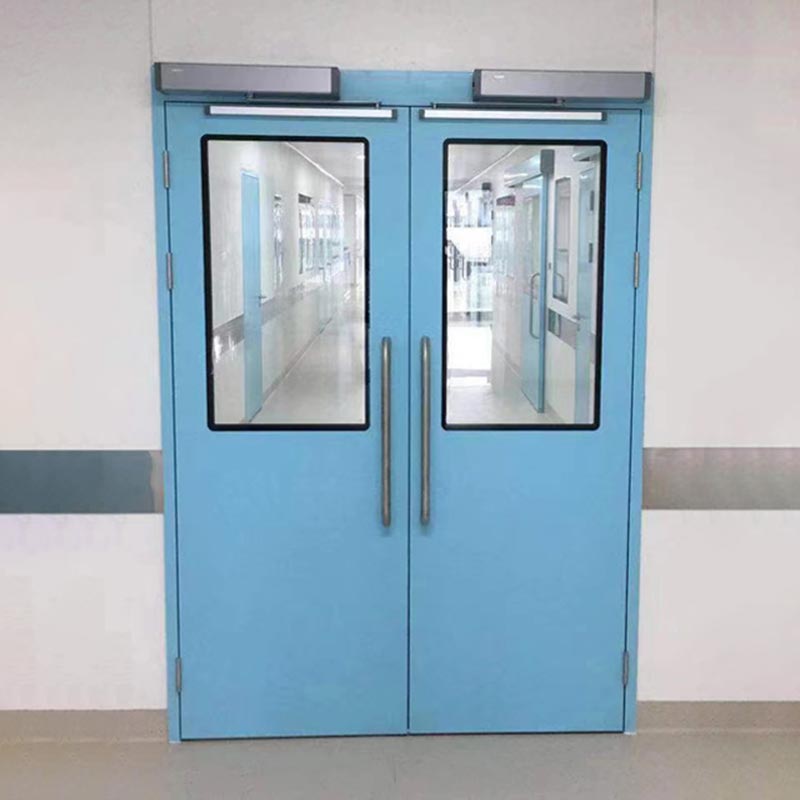
A laboratory swing door is a specialized hinged door designed for controlled environments where hygiene, safety, and pressure regulation are essential. It typically opens in one direction and is built using materials that resist corrosion, chemical exposure, and microbial growth.

Unlike conventional doors, laboratory swing doors are designed with:

  • Sealed edges to prevent air leakage
  • Smooth surfaces for easy cleaning
  • Durable frames resistant to chemical disinfectants
  • Optional vision panels for observation without entry

Key Features and Materials

Laboratory swing doors are not one-size-fits-all. Their performance depends heavily on material selection and engineering precision.

Component Common Material Function
Door Panel Stainless steel / HPL / Powder-coated steel Durability and contamination resistance
Core Filling Honeycomb / PU foam Sound insulation and thermal stability
Seals EPDM rubber Air-tight sealing
Window Panel Tempered glass Visibility and monitoring

Additional features often include automatic closing systems, antimicrobial coatings, and fire-resistant cores for enhanced safety.


Why Laboratory Swing Doors Matter

The importance of laboratory swing doors extends far beyond physical access. They directly influence contamination control, workflow efficiency, and energy conservation.

  • Contamination Prevention: Proper sealing prevents airborne particles from entering controlled environments.
  • Air Pressure Stability: Maintains positive or negative pressure in cleanrooms.
  • Workflow Optimization: Smooth opening mechanisms reduce delays in personnel movement.
  • Energy Efficiency: Helps maintain HVAC-controlled environments with minimal leakage.

In high-stakes environments like pharmaceutical labs, even a minor breach can compromise entire production batches.


Applications Across Industries

Laboratory swing doors are widely used across multiple industries:

  • Pharmaceutical Manufacturing: Ensures sterile production environments
  • Biotechnology Labs: Supports controlled biological research
  • Hospitals: Maintains sterile surgical and testing areas
  • Food Testing Laboratories: Prevents cross-contamination
  • Chemical Research Facilities: Protects personnel from hazardous exposure

Design Considerations

Designing a laboratory swing door requires careful consideration of environmental conditions and operational requirements.

  • Room pressure requirements (positive or negative)
  • Frequency of door usage
  • Type of chemicals used in the environment
  • Fire safety regulations
  • Ergonomic accessibility

Customization is often necessary to match specific laboratory workflows.


Installation Guidelines

Proper installation is essential to ensure airtight performance and long-term durability.

  • Ensure frame alignment with wall structure
  • Use professional sealing compounds for gaps
  • Test swing direction and clearance space
  • Verify automatic closing mechanism (if installed)

Incorrect installation may lead to air leakage and reduced contamination control efficiency.


Maintenance and Cleaning

Laboratory swing doors require regular maintenance to maintain performance and hygiene standards.

  • Daily cleaning with non-abrasive disinfectants
  • Monthly inspection of seals and hinges
  • Lubrication of moving components
  • Immediate replacement of damaged gaskets

Routine maintenance ensures longevity and reduces operational risks.


Swing Door vs Other Door Systems

Feature Swing Door Sliding Door Automatic Door
Air Tightness High Medium Medium
Maintenance Low Medium High
Cost Moderate High High
Durability High Medium Medium

Common Problems and Solutions

  • Air Leakage: Replace worn-out seals immediately
  • Door Misalignment: Re-adjust hinges and frame
  • Noise During Operation: Lubricate hinge components
  • Surface Corrosion: Use appropriate cleaning agents

Safety and Compliance Requirements

Laboratory swing doors must comply with international safety standards related to cleanroom design, fire resistance, and material safety. Compliance ensures safe operation and reduces risk in sensitive environments.

  • Fire-rated construction standards
  • ISO cleanroom classification compatibility
  • Chemical resistance certification

Future Innovations

The future of laboratory swing doors is moving toward intelligent systems and advanced materials.

  • Smart access control integration
  • Touchless opening mechanisms
  • Self-healing antimicrobial coatings
  • IoT-based monitoring systems

Frequently Asked Questions

Q1: What makes laboratory swing doors different from regular doors?
They are designed for airtight sealing, contamination control, and chemical resistance.

Q2: Are they suitable for cleanrooms?
Yes, they are commonly used in ISO-classified cleanroom environments.

Q3: How often should maintenance be performed?
Basic cleaning should be daily, with full inspection monthly.

Q4: Can they be customized?
Yes, size, material, and features can be tailored to specific lab requirements.


Conclusion and Contact

Laboratory swing doors are a foundational component in maintaining controlled environments. Their role in contamination prevention, safety assurance, and operational efficiency makes them indispensable in modern laboratories.

Choosing the right design, materials, and installation method ensures long-term performance and regulatory compliance. As laboratory environments continue to evolve, advanced door systems will play an even greater role in supporting precision-driven industries.

Ningbo OWNIC Technology Co., Ltd. specializes in high-quality laboratory swing door solutions designed for demanding controlled environments. With a focus on durability, hygiene, and precision engineering, the company delivers reliable solutions for global laboratory needs.

If you are looking for customized laboratory swing door systems or professional consultation, contact us today to explore tailored solutions that fit your project requirements.

Related News
Leave me a message
X
We use cookies to offer you a better browsing experience, analyze site traffic and personalize content. By using this site, you agree to our use of cookies. Privacy Policy
Reject Accept