News

News

Discover the Latest News About OWNIC in Our News and Press Area

Why Is Fire Rated Steel Door Essential for Modern Building Safety?

2026-05-18 0 Leave me a message

Fire safety has become one of the most important concerns in residential, commercial, and industrial construction. A Fire Rated Steel Door is more than just an entrance solution — it is a critical barrier designed to slow down fire spread, protect lives, reduce property damage, and help buildings comply with safety regulations. This article explores how fire rated steel doors work, their advantages, applications, certifications, installation requirements, maintenance practices, and how to choose the right product for your project.

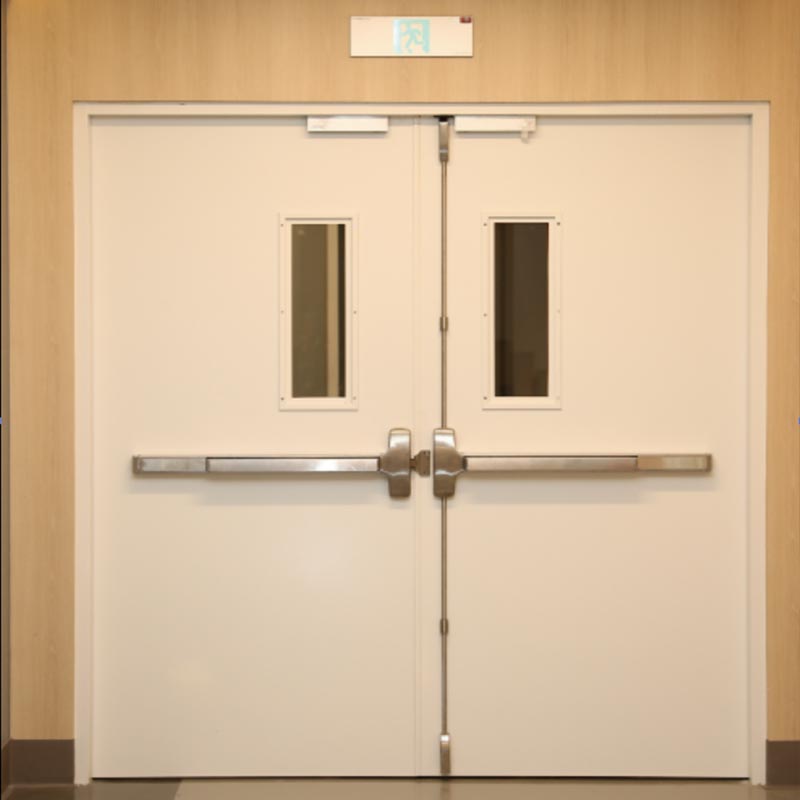
Fire Rated Steel Door


1. What Is a Fire Rated Steel Door?

A Fire Rated Steel Door is a specially engineered steel door system designed to resist fire and smoke for a specified period of time. Unlike ordinary doors, these doors are tested under extreme heat conditions to ensure they can contain fire long enough for occupants to evacuate safely and for emergency responders to take action.

These doors are typically manufactured using galvanized steel sheets combined with fire-resistant core materials such as mineral wool, honeycomb structures, vermiculite boards, or rock wool insulation.

Feature Standard Steel Door Fire Rated Steel Door
Fire Resistance Minimal 30-180 Minutes
Smoke Protection Limited Excellent
Heat Insulation Basic Advanced
Safety Compliance Not Certified Certified

2. How Does a Fire Rated Steel Door Work?

The core purpose of a fire rated steel door is compartmentalization. During a fire, the door acts as a protective barrier that prevents flames, toxic smoke, and heat from rapidly spreading into adjacent areas.

When exposed to high temperatures:

  • The steel surface maintains structural stability.
  • Intumescent seals expand to close door gaps.
  • The fire-resistant core slows heat transfer.
  • Smoke seals minimize toxic smoke leakage.
  • Heavy-duty hardware keeps the door securely closed.

This combination significantly increases evacuation time and reduces fire damage.


3. Why Are Fire Rated Doors Important?

Many building owners underestimate how quickly fire can spread. In modern structures containing electrical systems, synthetic materials, and HVAC systems, fire growth can become uncontrollable within minutes.

Key Benefits:
  • Protect human life
  • Reduce smoke inhalation risks
  • Limit property destruction
  • Improve evacuation safety
  • Support building code compliance
  • Lower long-term liability risks

For hospitals, schools, hotels, data centers, factories, and office buildings, fire rated steel doors are often mandatory.


4. Common Fire Ratings Explained

Fire doors are classified according to how long they can resist fire exposure during testing.

Fire Rating Typical Applications Protection Level
30 Minutes Residential Corridors Basic
60 Minutes Commercial Buildings Medium
90 Minutes Stairwells & Exits High
120-180 Minutes Industrial Facilities Maximum

Choosing the correct rating depends on local regulations, building design, and occupancy type.


5. Main Components of Fire Rated Steel Doors

A high-quality fire rated steel door system includes multiple engineered components.

  • Steel Door Leaf: Provides structural durability.
  • Fire Resistant Core: Reduces heat transfer.
  • Door Frame: Reinforces fire integrity.
  • Intumescent Seal: Expands under heat.
  • Smoke Seal: Prevents smoke penetration.
  • Fire Rated Hinges: Maintain stability during fire.
  • Door Closer: Ensures automatic closure.
  • Panic Hardware: Supports emergency evacuation.

Every component must be tested as part of the complete fire door assembly.


6. Advantages of Fire Rated Steel Doors

Superior Durability

Steel doors resist warping, cracking, termites, and moisture damage far better than wood doors.

Enhanced Security

Their reinforced construction provides excellent resistance against forced entry.

Long Service Life

Fire rated steel doors can remain functional for decades with proper maintenance.

Low Maintenance

Steel surfaces are easier to clean and maintain compared to timber alternatives.


7. Where Are Fire Rated Steel Doors Used?

Fire rated steel doors are widely installed across many industries and environments.

  • Commercial office buildings
  • Hospitals and healthcare facilities
  • Educational institutions
  • Hotels and resorts
  • Warehouses and factories
  • Shopping malls
  • Apartment complexes
  • Underground parking areas
  • Data centers
  • Power plants

In many buildings, fire doors are installed in stairwells, emergency exits, mechanical rooms, electrical rooms, and corridor partitions.


8. Fire Door Standards and Certifications

Reliable fire rated steel doors must comply with recognized testing and certification standards.

Standard Region Purpose
UL 10C United States Positive Pressure Fire Test
BS 476 United Kingdom Fire Resistance Testing
EN 1634 Europe Door Assembly Fire Test
NFPA 80 International Installation & Maintenance

Always verify product certifications before purchasing.


9. How to Choose the Right Fire Rated Steel Door

Selecting the correct fire door requires careful evaluation of project requirements.

  • Determine required fire rating duration
  • Check local building codes
  • Consider door size and configuration
  • Choose proper core materials
  • Verify certified hardware compatibility
  • Evaluate acoustic and thermal performance
  • Review corrosion resistance requirements
  • Select suitable surface finishes

Working with experienced manufacturers can simplify specification and compliance processes.


10. Installation Requirements

Even the best fire rated steel door can fail if improperly installed.

Correct installation includes:

  • Proper frame anchoring
  • Correct clearance gaps
  • Certified hardware installation
  • Approved seal placement
  • Self-closing functionality testing
  • Alignment verification

Professional installation is strongly recommended to maintain certification validity.


11. Maintenance and Inspection Tips

Routine inspections help ensure long-term performance.

Inspection Item Recommended Frequency
Door Alignment Monthly
Seal Condition Monthly
Hardware Function Quarterly
Surface Corrosion Every 6 Months
Certification Labels Annually

Damaged components should always be replaced with certified parts.


12. Common Buyer Mistakes

Many buyers focus only on price and overlook critical performance factors.

  • Choosing uncertified products
  • Ignoring hardware compatibility
  • Using incorrect fire ratings
  • Improper installation practices
  • Skipping periodic inspections
  • Modifying doors after installation

These mistakes can compromise safety and lead to compliance issues.


13. Fire Rated Steel Door vs Wooden Fire Door

Comparison Factor Steel Door Wooden Door
Durability Excellent Moderate
Moisture Resistance High Lower
Security Very High Medium
Maintenance Low Higher
Lifespan Long Medium

14. Cost Factors

The price of fire rated steel doors varies based on several factors:

  • Fire rating duration
  • Door dimensions
  • Steel thickness
  • Core material selection
  • Surface finish options
  • Hardware requirements
  • Certification standards
  • Customization level

While initial costs may be higher than standard doors, long-term durability and safety benefits provide excellent value.


15. Future Trends in Fire Door Technology

Modern fire door technology continues to evolve with smarter safety integration.

Emerging innovations include:

  • Smart fire monitoring systems
  • Integrated access control compatibility
  • Improved thermal insulation materials
  • Enhanced smoke sealing technologies
  • Environmentally friendly manufacturing
  • Advanced corrosion-resistant coatings

These advancements help improve building safety while supporting modern architectural requirements.


16. Frequently Asked Questions

Can fire rated steel doors stop smoke?

Yes. Most fire rated steel doors include smoke seals designed to reduce toxic smoke spread during fire emergencies.

How long can a fire rated steel door resist fire?

Depending on the certification, fire rated steel doors can resist fire for 30, 60, 90, 120, or even 180 minutes.

Can fire rated doors be customized?

Yes. Manufacturers can provide customized sizes, colors, finishes, vision panels, hardware options, and locking systems.

Do fire rated steel doors require special maintenance?

Regular inspections and proper hardware maintenance are important to ensure continued performance and certification compliance.

Are fire rated steel doors suitable for residential use?

Absolutely. They are commonly used in apartment buildings, garages, utility rooms, and residential exit pathways.


17. Conclusion

A Fire Rated Steel Door is one of the most critical investments for modern building protection. Beyond regulatory compliance, these doors provide life-saving fire resistance, enhanced security, long-term durability, and improved property protection.

Whether for commercial towers, industrial facilities, healthcare centers, or residential complexes, choosing the correct fire rated steel door system can significantly improve overall safety performance.

As an experienced manufacturer in the building safety industry, Ningbo OWNIC Technology Co., Ltd. provides reliable fire rated steel door solutions designed for durability, compliance, and modern architectural needs.


Contact Us

Looking for dependable Fire Rated Steel Door solutions for your next project? Contact Ningbo OWNIC Technology Co., Ltd. today for professional support, customized designs, competitive pricing, and high-performance fire protection products tailored to your building requirements.


Related News
Leave me a message
X
We use cookies to offer you a better browsing experience, analyze site traffic and personalize content. By using this site, you agree to our use of cookies. Privacy Policy
Reject Accept